

Prof. Xiumin Wang, South China University of Technology, China
Xiumin Wang, female, is a Professor and Doctoral Supervisor at the School of Computer Science and Engineering, South China University of Technology, and a recipient of the Guangdong Provincial Distinguished Youth Fund. She has long been engaged in research on federated large model fine-tuning, edge intelligence, and cloud-edge collaboration. She has accumulated systematic and in-depth research experience in distributed optimization, modeling of resource-constrained intelligent systems, and collaborative optimization in heterogeneous environments. Regarding her research achievements, she has published over 50 academic papers as the first or corresponding author in prestigious IEEE/ACM journals and international conferences, including high-level journals such as IEEE Transactions on Information Forensics and Security (TIFS, CCF A), IEEE Trans. on Mobile Computing (TMC, CCF A), IEEE Trans. on Services Computing (TSC, CCF A), and IEEE Trans. on Parallel and Distributed Systems (TPDS, CCF A), as well as international high-level conferences like IEEE INFOCOM (CCF A) and IEEE ICC. In terms of research projects, she has presided over multiple projects, including the National Natural Science Foundation of China (Youth and General projects) and the Guangdong Natural Science Foundation (Distinguished Youth and General projects).
Speech Title: Research on Heterogeneous Client Incentive Mechanisms for Efficient and Trustworthy Federated Learning
Abstract: In recent years, federated learning has received widespread attention as a machine learning paradigm that balances data privacy protection with distributed model training. However, the multi-dimensional heterogeneity of clients in practical federated learning systems—such as computing resources, training capabilities, and privacy requirements—leads to insufficient participation, reduced training efficiency, and limited model performance. This report focuses on client incentive mechanisms in heterogeneous federated learning, highlighting two types of auction-based incentive methods targeting heterogeneous training capabilities and privacy requirements. To address the resource utilization efficiency issue caused by differences in training capabilities, an auction mechanism is designed to jointly optimize client training intensity and communication latency, achieving efficient client selection and reward allocation while satisfying properties such as individual rationality, budget balance, truthfulness, and computational efficiency. For scenarios involving differential privacy, an incentive mechanism that balances privacy requirements with long-term participation fairness is proposed to achieve reasonable client selection and payment decisions. Experimental results show that the proposed methods can effectively improve the training performance, resource utilization efficiency, and client participation fairness of the federated learning system, providing theoretical and technical support for building efficient and trustworthy federated learning systems.
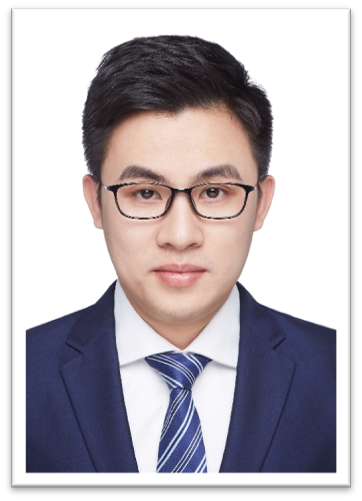
Prof. Ji Zhou, Beijing Institute of Technology (Zhuhai), China
Ji Zhou, male, is a Professor. He currently serves at the Beijing Institute of Technology (Zhuhai). He is a postdoctoral fellow at The Hong Kong Polytechnic University (Hong Kong Scholars Program), a member of the 9th China Association for Science and Technology Young Talent Support Program, and a recipient of the Guangdong Special Support Program for Youth Top-notch Talents. He has published over 100 academic papers in authoritative journals and conferences in the field of optical communication and has won the Huawei Spark Award twice.
Speech Title: Research on High-Speed Passive Optical Networks
Abstract: Currently, operators have begun pilot programs for 50G PON ten-gigabit access, and the standards for B50G (200G) PON are about to be formulated. This report will summarize the speaker's innovations in 50G PON digital signal algorithms, analyze the problems and challenges faced by 200G PON, and introduce corresponding solutions proposed by the speaker.
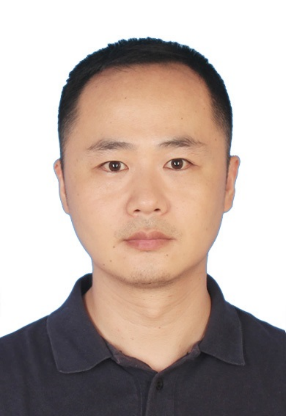
Assoc. Prof. Dagang Li, Macau University of Science and Technology, Macau, China
Dagang Li, male, is an associate professor at the School of Computer Science and Engineering, Macau University of Science and Technology. Before joining MUST, he worked at Peking University Shenzhen Graduate School as an assistant professor. He received his Bachelor’s degree in Telecommunication Engineering from Huazhong University of Science and Technology, China, and completed his PhD studies in Electrical Engineering at Katholieke Universiteit Leuven, Belgium. He has published over 100 papers in various journals and top conferences. His research interests include autonomous vehicles, embodied AI, AIOT networks, and green energy systems. He is a member of CCF/ACM/IEEE.
Speech Title: Reinforcement Learning Methods for SFC Orchestration
Abstract: Advanced networking technology and artificial intelligence (AI) have significantly driven the development of intelligent and software-defined networks. Network operators have implemented a variety of Virtual Network Functions (VNFs) at the network edge with Service Function Chains (SFCs) to meet the ever-changing needs of network service requests. However, dynamic and real-time service support poses a great challenge for efficient service orchestration and resource allocation. How to achieve dynamic SFC orchestration while minimizing operational costs and resource consumption becomes one of the main concerns for network operators. This talk will introduce some of the on-going Reinforcement Learning based research activities in our research group for better solutions to these challenging issues.
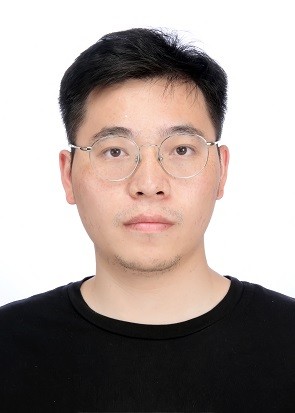
Lecturer Xiangjun Cai, Wenzhou University, China
Biography: Xiangjun Cai is a Lecturer at the College of Computer Science and Artificial Intelligence, Wenzhou University. He received his Ph.D. from Macau University of Science and Technology. He has long been engaged in research on time series analysis and forecasting, with a focus on learning-based modeling of complex temporal data. His current research interests include decomposition-based forecasting, deep learning for time series, online temporal modeling, and their applications in network traffic prediction and intelligent network operations. He has published 8 academic papers as the first or corresponding author in international journals and conferences, including 3 papers in CAS Q1 journals and 1 paper accepted by a CCF-B conference. He is a member of CCF/IEEE.
Speech Title: Efficient and Aligned Decomposition-Ensemble Learning for Network Traffic Forecasting
Abstract: Accurate time series forecasting is essential for intelligent network operations, supporting traffic prediction, resource scheduling, performance optimization, and anomaly detection. Decomposition-ensemble learning has proven effective for modeling complex and non-stationary network traffic. However, existing frameworks face two key challenges: rolling decomposition incurs heavy computational overhead and boundary effects in online scenarios, while in multivariate settings, MEMD-based methods tend to sacrifice decomposition quality for component alignment. How to achieve efficient decomposition and proper component alignment without compromising forecasting accuracy becomes a critical concern. This talk will introduce two decomposition-ensemble methods developed to address these issues: M-EDEM, which learns a direct mapping from raw time series to their decomposed components, replacing repetitive decomposition with fast neural inference; and MA-EMD, which decomposes each variable independently with standard EMD and aligns the components according to the intrinsic frequency structure of the target series. Experimental results on public datasets demonstrate their effectiveness in network traffic prediction scenarios such as base-station traffic, link load, and intelligent network management.

Lecturer Linlin Wang, Planning and Design Institute of the Ministry of Agriculture and Rural Affairs / Shenzhen Polytechnic University, China
Dr. Linlin Wang, female, is a CPC member. She is a postdoctoral fellow at the Planning and Design Institute of the Ministry of Agriculture and Rural Affairs and a Lecturer in Software Technology at the School of Artificial Intelligence, Shenzhen Polytechnic University. She is a member of the Chinese Society of Agricultural Engineering, an expert on the decision-making advisory team for Huidong County's "Hundred Counties, Thousand Towns, and Ten Thousand Villages" project, a rural science and technology special commissioner for Heyuan City, Deputy Secretary-General of the first Council of the Precision Agricultural Aviation Technology Promotion Branch of the China Agricultural Technology Extension Association, and an off-campus graduate supervisor at the College of Engineering, South China Agricultural University.
Speech Title: Research on Non-destructive Detection Method of Guava Quality Based on Multi-light Source Imaging Technology
Abstract: The maturity grading and rapid assessment of key quality parameters of guava are of great significance for post-harvest grading, storage and transport control, and quality assurance. Relying on manual experience or destructive physical and chemical testing suffers from high subjectivity, low efficiency, and difficulty in standardization. This study takes Pearl Guava as the object and proposes a non-destructive detection method that integrates 3D fluorescence spectroscopy mechanism analysis with multi-light source imaging. It constructs a research framework of "fluorescence mechanism analysis — multi-light source imaging system setup — image feature extraction — machine learning and deep learning modeling and evaluation," providing theoretical and methodological support for the rapid non-destructive detection and automatic maturity grading of guava quality.
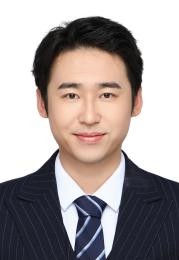
Postdoc Weiguang Yang, South China Agricultural University, China
Weiguang Yang, male, Ph.D. in Engineering, is currently a Zijin Postdoctoral Fellow at the College of Artificial Intelligence and Low-altitude Technology, South China Agricultural University. He is mainly engaged in research on UAV remote sensing, agricultural informatics, and low-altitude intelligent sensing. He has presided over the National Natural Science Foundation of China (Class C) and the China Postdoctoral Science Foundation project. He has published over 20 SCI papers, including 2 papers in high-impact journals (impact factor > 10) as the first or corresponding author; he has 1 Clarivate Analytics Hot Paper and Highly Cited Paper; he holds 5 authorized invention patents, and has won awards such as the Bronze Award of the National Postdoctoral Innovation and Entrepreneurship Competition and the National Scholarship for Graduate Students.
Speech Title: Precise Analysis of Cotton Water and Nitrogen Content via Spectral Reconstruction and Physical Constraint Fusion
Abstract: Addressing the difficulty in low-cost, continuous, and stable monitoring of canopy moisture and nitrogen status in precision water and fertilizer management for cotton, this report introduces a methodology system that integrates low-altitude multispectral remote sensing, hyperspectral reconstruction, the PROSAIL radiative transfer model, and modular transfer learning. Based on multi-region and multi-year cotton experimental data, this study constructs inversion models for leaf nitrogen content and equivalent water thickness, enhancing the cross-regional and cross-growth-stage adaptability of the models, thereby providing technical support for cotton field water and fertilizer diagnosis, variable management, and precision agricultural aviation applications.